

“Table for one,” he told the hostess.
“Right this way, sir,” she said.
“Thanks,” he said.
She took him to a small, square table in a quiet corner near the back of the restaurant. He took off his coat and hung it on the back of one of the chairs, then sat down in the other. He rested his hands carefully on the edge of the table. He took out his phone and opened his lock screen. He had one notification, an email from his bank. There was a credit card that he was pre-approved for. He put his phone away again.
The waitress came over with a menu and a glass of water. She set them both down on the table, then turned around and went away without saying anything. The glass of water was tall and slightly thinner than average. It had ice and a straw in it. The end of the paper wrapper was still on the straw. He took off it and sucked up some of the water. It tasted like water. It was very cold. When the cold touched his teeth, it made them ache a little. Five years ago, his dentist had told him his teeth were sensitive.
“Use this toothpaste,” the dentist had said, writing out a prescription. “It’s specially formulated for people with your issues.”
“Okay,” he had said. He had gotten the prescription filled the next day. It was more expensive than the toothpaste he had been using before, but he continued using it. He thought it was making a difference, although it was hard for him to be sure.
He turned his attention to the menu. It was a large menu, and the text was relatively small. The amount of options made him feel slightly overwhelmed. He was so focused on studying it he didn’t notice the waitress had come back until she was right there at his table, setting down another glass of water. He hadn’t asked for it; she had just brought it, seemingly of her own accord. It was indistinguishable from the first, except that its straw still had the end of its wrapper on it.
“Excuse me –” he started to say, but the waitress was already walking away. She seemed to not have heard him.
He felt confused. He looked at the two glasses of water sitting next to each other on the table. He found looking at them disconcerting in a way that he didn’t really understand. Something seemed wrong about them being there together like that, two glasses of water for just one person. He put his hands in his lap. He put his hands up on the table. He put his hands back in his lap, then at his sides. He saw the waitress passing by. He made a motion to get her attention, and she came over.
“Excuse me…” he said, gesturing towards the two glasses.
“Oh, I’m sorry about that,” said the waitress. “I’ll get you another one right away.”
“No –” but she had already gone away. A minute later, or even less than that, she came back with another glass of water, which she set on the table near the other two. The three glasses now created a triangular formation on its surface.
“Thank you, but…”
“I’ll just take that for you.” She reached over and retrieved the menu, which was lying on the table. He had been so preoccupied with the matter of the water glasses, he had forgotten all about it.
“Oh, yes, well –” but the waitress had gone away again.
He looked around. There were only a few other customers in the establishment. There was an elderly couple eating silently. A younger couple seated at the table beside them who were also eating silently. There were three businessmen in tan suits eating and talking quietly. He could hear the general sound of the conversation but nothing of what they were saying. There were two girls who looked like they could be sisters eating and looking at their phones. One of them would sometimes turn their screen around to show the other something on it, which would sometimes elicit a soft laugh or a comment like “That’s light years,” or “Freak me.” There didn’t seem to be any other staff, except for the hostess at the entrance, and, he assumed, some number of back of house workers. While he was observing these things, the waitress came back and brought him a fourth and fifth glass of water. She set them down far away from the other glasses and from him, on the other side of the table. He had the thought that, as far as he could tell, he was the only person in the restaurant who was eating alone. While he had this thought, the waitress disappeared again. He resolved that next time he saw the waitress, he would say something to her. He would tell her that he didn’t need any more glasses of water. He would tell her that, actually, he wanted to eat. It occurred to him that she hadn’t even taken his order yet. It occurred to him that he didn’t even know what his order actually was. He hadn’t had enough time to examine the menu. This made him feel anxious. He didn’t want to make himself look foolish by ordering something bizarre. He tried to think what a typical order at this restaurant would probably be. He put his hands on the table, then put them back in his lap.
The next time the waitress came around, bringing another glass of water, he tried to say something. He tried to speak up, louder than he was used to speaking, and, he thought, very clearly. Still, though, the waitress seemed not to hear him. That, or she was ignoring him intentionally, but he found this hard to believe. No one at the other tables seemed to have had any problems getting their food. He tried to say something again the next time she came by, and the time after that, but both times the waitress just set the glass of water down and left. It began to feel to him like he really was being singled out specifically, but he couldn’t think of a reason why. He didn’t recognize the waitress, or at least he didn’t think he did. The same went for the hostess. Could the owner of the restaurant have a grudge against him? He or she could have been watching when he’d come in and recognized him. He tried to think of a reason the owner of a restaurant might have a grudge against him, and couldn’t think of any. He couldn’t think of a reason why anyone at all would have a grudge against him, really. As far as he could remember, he had never mistreated anyone. He mostly kept to himself. In high school he was even voted “Most Inoffensive.”
He felt his phone vibrate. He took it out of his pocket and checked it. There was a new notification. It was from his phone and internet provider. He had points he could redeem for rewards. He put his phone back in his pocket. The waitress came back. This time, she was carrying a basket of breadsticks. She set them down on the table and left. He didn’t try to say anything to her. The mere fact that it wasn’t another glass of water, that it was, in fact, something he could actually eat, had surprised him so much he had been rendered temporarily unable to speak. The basket was red plastic and was lined with coated wax paper. There were six breadsticks inside. He took one and bit into it. It was warm. The crust was hard, and the inside was very dry. He tasted salt and not much else. It was decent enough, he thought, all things considered. He chewed slowly, and then drank some water to wash it down.
Time passed. The waitress kept coming back, at more or less regular intervals, always bringing another cool glass of water. Each time, he told himself he would say something, but he never quite managed to. He finished the breadsticks, and the waitress took the basket away. She never brought another. The table became crowded with glasses of water. The waitress had begun rearranging the glasses when she came around, forming them into neat rows that went right up the table’s edge, trying to make optimal use, he assumed, of the available surface area. There was barely any room left, and it was all on the opposite side of the table from him. The rows made him feel hemmed in. They reminded him of troops massed in formation. The straws with the ends of the wrappers still on them, he imagined, were like rifles with their attached bayonets. He checked his phone, and saw that he was almost out of battery. He didn’t have any new notifications.
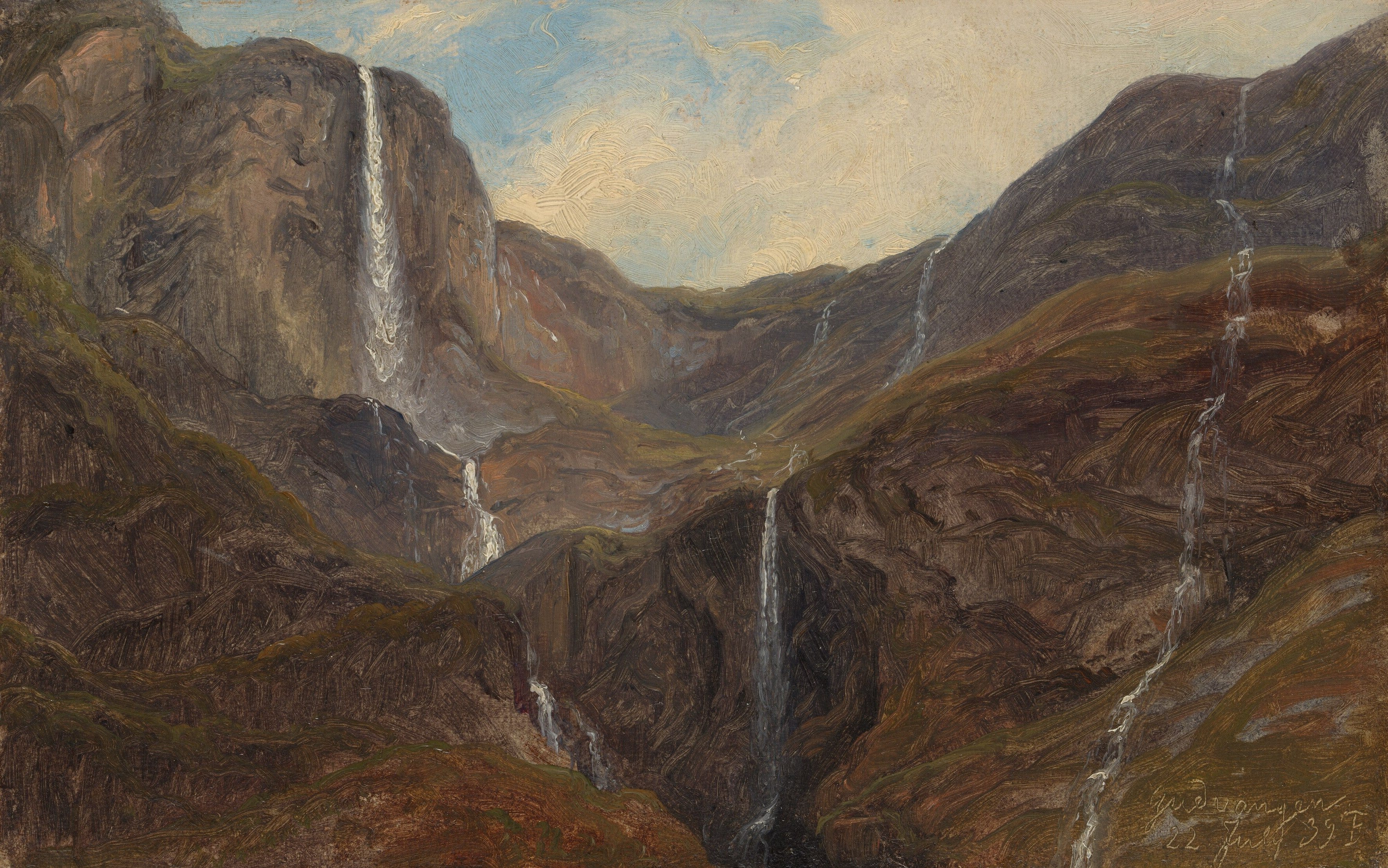
He looked around, and became suddenly aware that there was no one else in the restaurant. At some point, the lights had all been turned off, and the workers had all gone home. As he became aware of this, the glasses of water ceased being discrete units and became instead a single great tide, one which surged over the edges of the table, onto the floor, and carried him swiftly away, still in his chair, which he clung to like a shipwrecked sailor to some buoyant piece of wreckage from his destroyed craft, and towards a waterfall which had emerged out of the mist, and which roared in a thousand voices, and fell blindly into a great, humid darkness.