This is the first in a series of five pieces on “minor” horror films that I’m going to be publishing here weekly, throughout October. For more information, please see this post from two years ago, when I first did this. I’m scaling things back a bit this year due to having (more of) a life, etc., but the basic idea is the same.
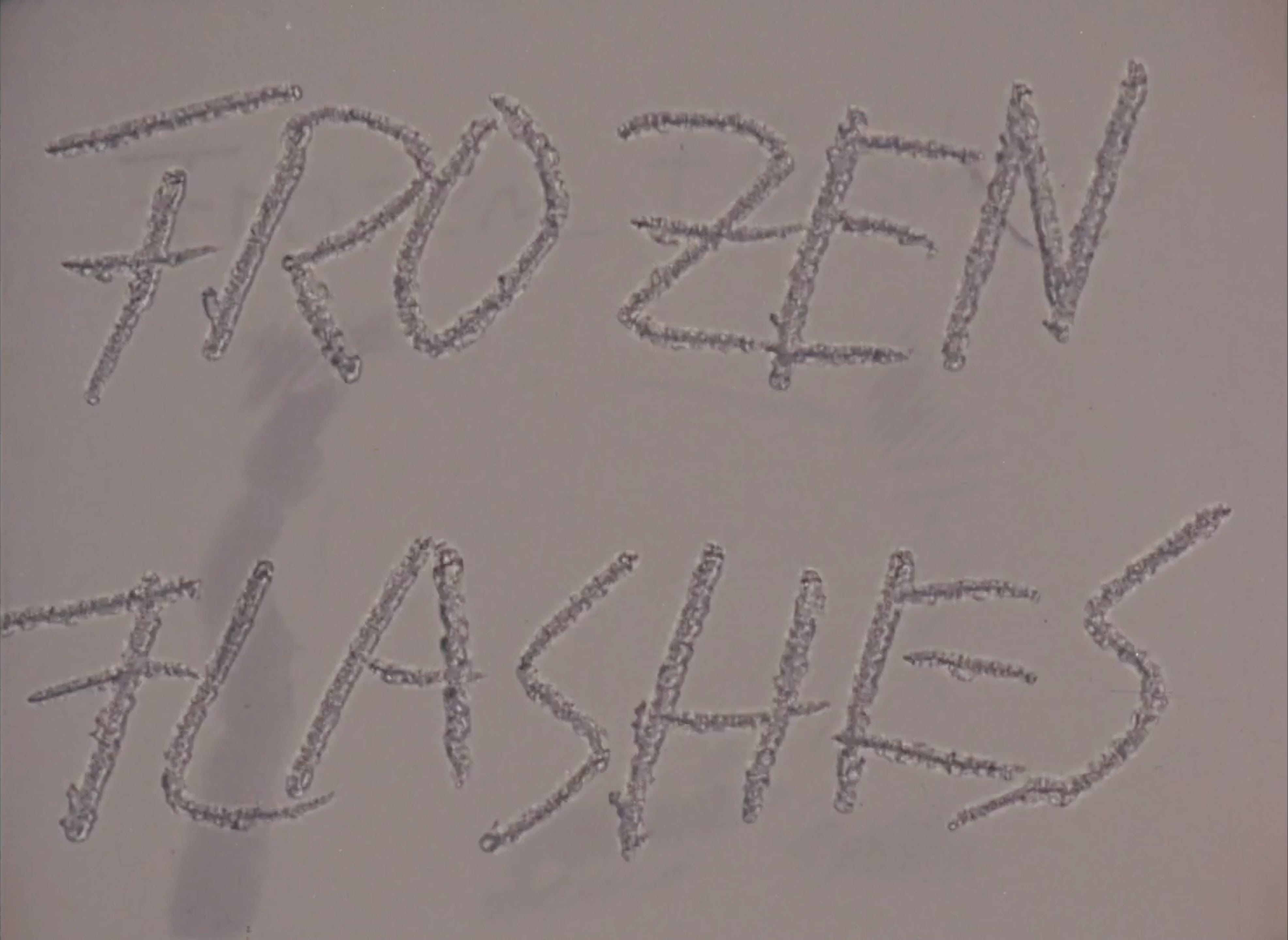
Frozen Flashes (Dore O., 1976)
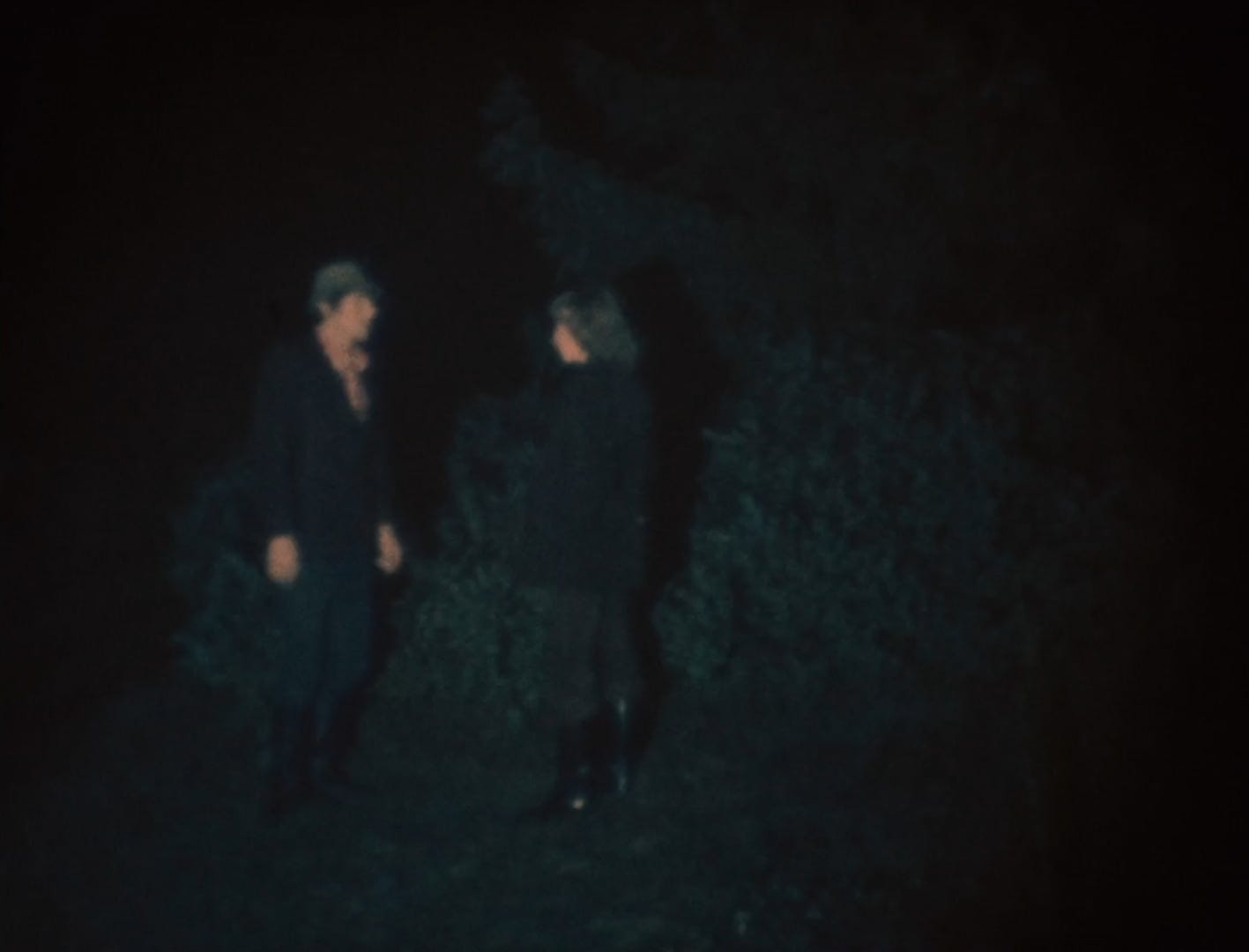
There is night. There is a house. The house is in the woods, or somewhere like the woods. There’s water nearby. A lake of uncertain size. There is a woman and a man in the house. They stand in the house, or they sit, or sometimes they walk. Their faces are generally blank. Sometimes the man is lying on the floor as if dead. Sometimes the woman is looking out the window. Sometimes they are both doing something else entirely. They are in the attic, or they are in a boat, or they are standing by a tree, or are a foot clad in a tall black rubber boot is getting into a car, or getting out of a car. There is night. There is always night. There is another man, peering in the window, or maybe it’s the same man as the man in the house. His face cannot be seen. He’s wearing a mask. The mask is a kind of clown face. It doesn’t reach the sides of his head. Sometimes he is peering in the window. Sometimes he is somewhere else, already inside. There is another presence here, one it is important not to miss: the camera. It looks at the night. It looks at the house. It looks at the trees and the water. It looks at the man and the woman in the house, in the trees, in the water. Sometimes they are looking away, but sometimes they are not. Sometimes they seem to be looking right look back at it. It is present here, the camera. It is part of what is unfolding. It is part of the picture. This is the basic situation of Frozen Flashes. It is not a film which positions itself as part of the “horror genre,” but how else would you describe this situation? How else?
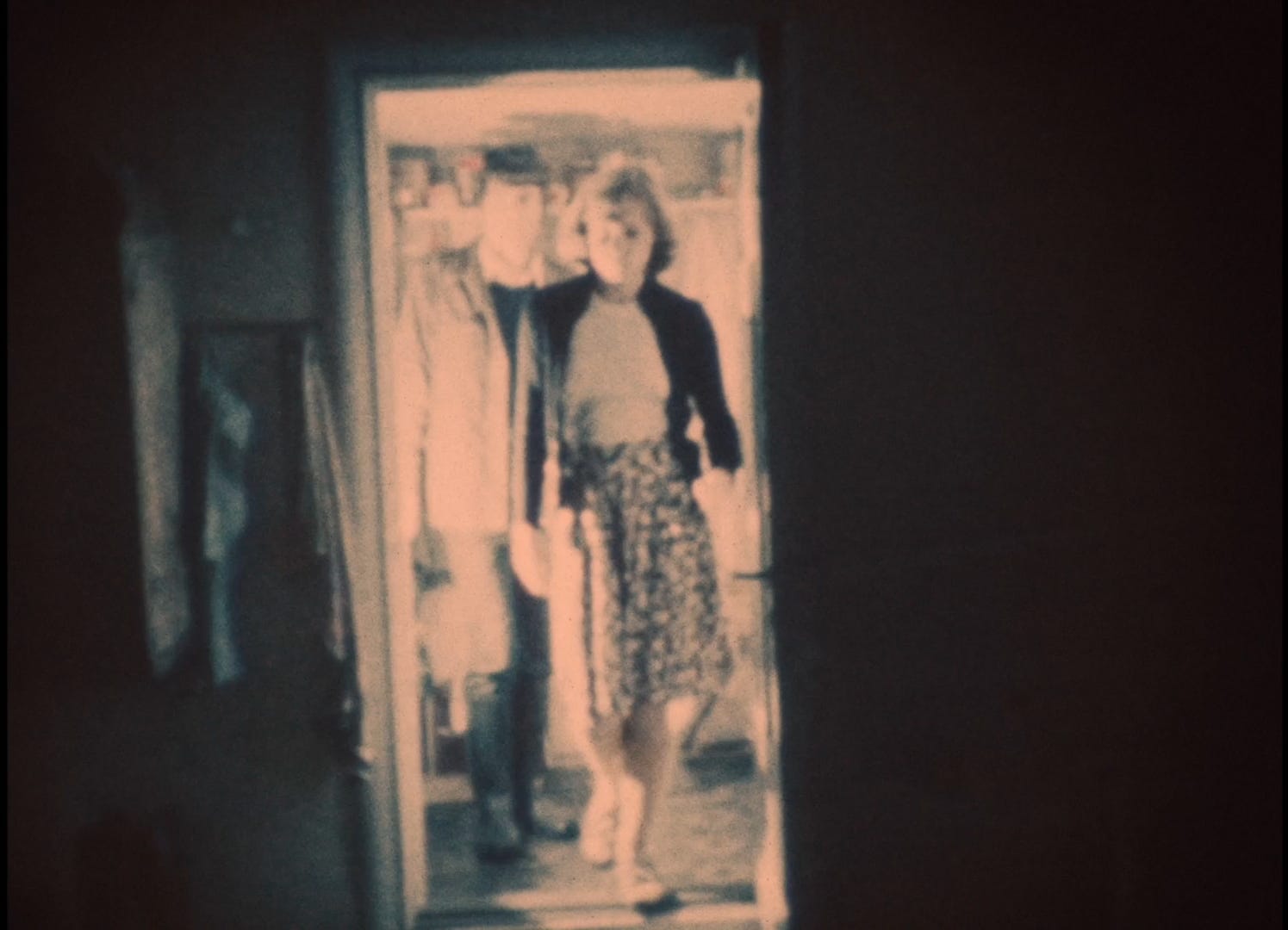
There is another thing it is important to know about the situation of Frozen Flashes, specifically of the camera’s role in it: the camera does not behave in the way it usually does. It does not record smoothly. It does not “film” the night, the house, the man and the woman, in the sense that to film to to record continuously, to create the illusion of motion. It photographs them. It photographs them repeatedly, in the same positions, or in almost the same positions. It photographs them only a few times, and alternates deliberately between these photographs. In some of these photographs they are lit up blindingly bright. In others they are nearly swallowed by night. In still others they really are swallowed by night. There is one “scene” in which they are near a small fire. It is inside the house, the fire is burning in a hearth or inside a kitchen fire pit. The image alternates between one in which the man and the woman are lit up clearly, the woman crouched near the fire, the man standing, facing another direction entirely, and one in which practically nothing can be seen but the flame itself. It flips back and forth between these images, not quickly enough for any strobing effect, but enough that it feels almost as if the fire moves. The man and the woman do not move, of course, or at least not meaningfully. Only the fire does. It seems only the fire can.
Frozen Flashes, I think, is a film of entrapment. It is, I suppose, “about” being trapped, about being in a nowhere-place and remaining there and not being able to leave, about going in circles in an endless night, but I think it’s wrong to think about a film like this in terms of what it’s “about.” When I say it is a film of entrapment, I mean it much more directly: the film is a trap. It entraps the man and the woman. They are caught. They are frozen. The camera does not let them move. It only lets them look. Sometimes it does not even allow them to do this. Sometimes they are in the night, and the night is dark, and there is no light to see by. In some sense, perhaps, the light only brings another kind of blindness. The man is in the house. The woman is in the house. It is night. There is a face at the window. It wears a mask. We do not know what this means. I do not know what any of this really means, what is really happening, what the true nature of this situation is. I suspect that the camera does, but the camera will not tell me. The camera is silent. The whole film, in fact, is silent. What else would you call this? What else?